


In the world of business, certain books have achieved almost mythical status. They have dominated airport bookstores, corporate reading lists, and executive seminars for years.
In Search of Excellence (1982), Blue Ocean Strategy (2005), and a long line of successors promise transformative insights that will revolutionize how organizations are run. Yet a closer look reveals a pattern: many of these blockbuster “hits” rely more on compelling narratives, selective storytelling, and memorable metaphors than on rigorous, replicable science. Management, it seems, is far more art than hard science.
The Storytelling Machine
Consider In Search of Excellence by Tom Peters and Robert Waterman. The book analyzed “America’s best-run companies” and distilled their success into eight memorable attributes, such as “a bias for action,” “staying close to the customer,” and “management by walking around.” It sold millions of copies and shaped a generation of managers.
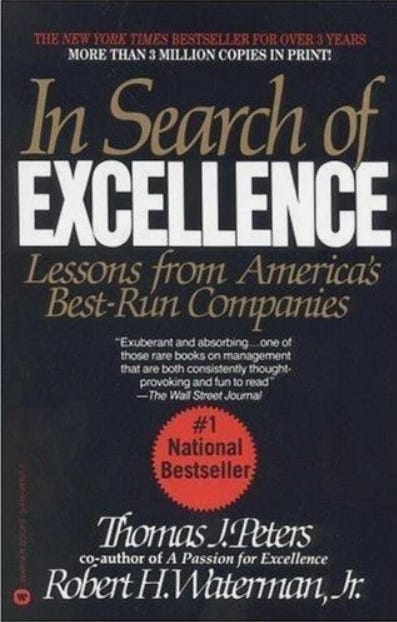
Critics, however, pointed to serious methodological weaknesses. The authors started with a list of high-performing McKinsey clients and applied criteria that have been described as unorthodox and largely unscientific. Many of the “excellent” companies later stumbled or declined, raising questions about survivorship bias and the durability of the lessons. Peters himself later reflected on the project in self-deprecating terms, with one infamous Fast Company article (which he approved) containing the line about having “faked the data”, though the phrase was more rhetorical flourish than literal admission.
The book’s enduring appeal lay not in ironclad empirical proof but in its engaging stories and practical-sounding principles. It turned complex organizational realities into digestible, actionable wisdom, a classic hallmark of effective business storytelling.
Blue Oceans or Recycled Ideas?
Blue Ocean Strategy by W. Chan Kim and Renée Mauborgne became another must-read. It urged companies to stop competing in bloody “red oceans” of cutthroat rivalry and instead create uncontested “blue oceans” of new market space through value innovation. Tools like the strategy canvas and the four actions framework (eliminate-reduce-raise-create) gave it a practical sheen.
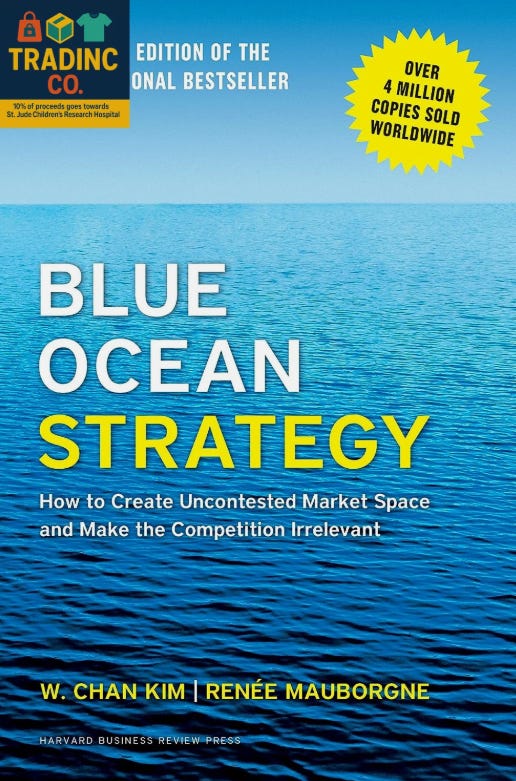
The ideas were built explicitly on earlier strategy thinking. It positioned itself against Michael Porter’s classic frameworks, particularly the notion of strategic trade-offs (e.g., cost leadership versus differentiation), where Porter emphasized choosing a position within existing industry structures. Kim and Mauborgne advocated breaking out of them.
Critics have noted that while the metaphors were fresh and powerful, the core concept of creating new demand or innovating on value-cost frontiers drew from longstanding ideas in innovation, entrepreneurship, and competitive strategy. It was only repacked into a great storytelling metaphor.
The book’s success came from its elegant framing and vivid imagery like oceans, canvases, and uncontested space, rather than groundbreaking new data. Many real-world “blue oceans” eventually attract competitors and turn red, as Porter and others predicted.
Why Narratives Win Over Data?
This pattern repeats across decades of management literature. Why? Complexity demands simplification: Organizations are messy, influenced by culture, timing, luck, regulation, and unpredictable human behavior. Rigorous academic research (with controls, large samples, and statistical validation) often yields nuanced, contingent findings that don’t sell as well as bold prescriptions.
Metaphors and stories are memorable. “Blue ocean,” “bias for action,” “disruptive innovation,” or “good to great” flywheel, become mental heuristic shortcuts. They travel easily from boardroom to boardroom.
Promotion and timing matter. Many hits emerge from consultants or academics with strong platforms (McKinsey alumni in the case of In Search of Excellence). A well-timed narrative that resonates with current anxieties. Japanese competition in the 1980s, globalization and commoditization in the 2000s are great examples and gain traction.
Values and opinions are at the core. Management inherently involves judgment calls about what “good” leadership, culture, or strategy looks like. These are not value-free scientific facts but normative choices. One leader’s empowering culture is another’s chaotic lack of accountability.
Art, Not Science
This doesn’t mean management books are worthless. Great ones provide inspiration, frameworks for thinking, and motivation to try new approaches. They synthesize experience and spark creativity. That’s these books innovation.
However, treating these books as proven scientific theories is a mistake.
True sciences like physics or biology rely on falsifiability, replication, and predictive power. Management research struggles here because context matters enormously, and controlled experiments are rare. What works at one company in one era often fails elsewhere. The best managers blend evidence (where it exists) with creativity, ethical judgment, and situational awareness. In short, they practice an art inspired by craft and experience.
The next time a shiny new management hit promises to solve your problems, approach it like a discerning patron of the arts. Enjoy the performance, extract useful techniques, but don’t mistake the fable for universal law. The real test is not whether the book topped the charts, but whether its ideas survive contact with the messy, unpredictable reality of your own organization. Management will always be more art than science. That’s what makes it endlessly fascinating and why storytelling will continue to outsell dry data.
Your donations are vital to keep some independent journalism alive.
Just click here or goto https://buymeacoffee.com/murrayhunter
Wise: https://wise.com/pay/me/murrayvictorh
PayPal: @MurrayHunter733
Subscribe Below