
Deep corruption within the Malaysian judicial system
And it’s not coming from where you think

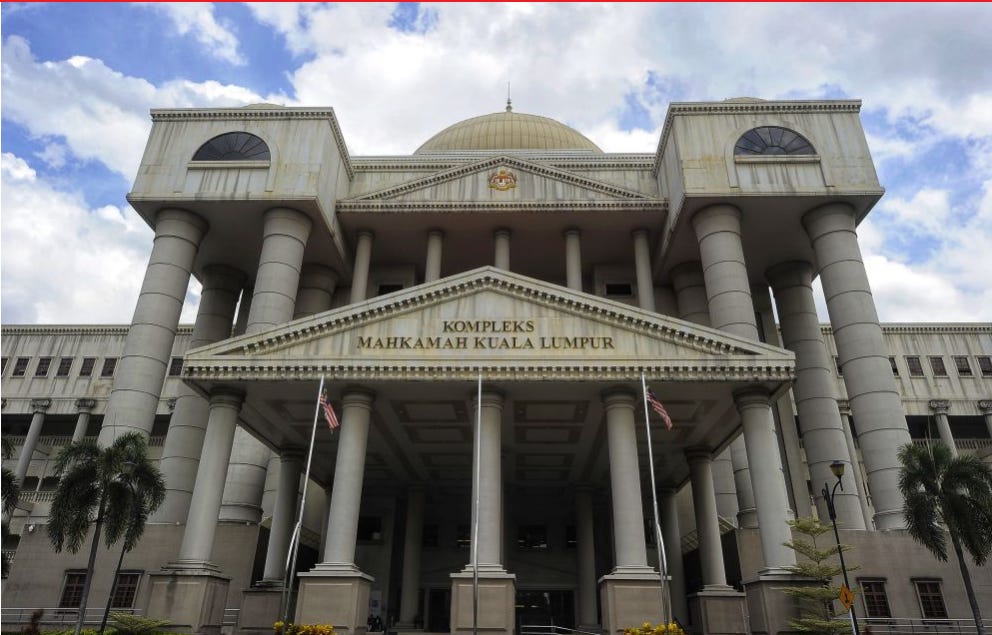
Most people are aware of the two-tier nature of Malaysia’s judiciary where a poor and destitute person gets a severe sentence and serves jail time, while a member of the Malay-polity gets a DNAA. There have long been suspicions that the attorney general, through its public prosecutor function can manipulate court cases. A deliberately poor prosecution performance can lead to a case being lost or dismissed.
That is why there is a proposed constitutional change separating the attorney general and public prosecutor offices, so that political interference in the judicial system can be minimized.
However, the deep corruption within the judicial system comes from the lawyers working within the court system themselves. There are just too many times people have told me that they feel their lawyers have not been acting in their best interests. Some go further and allege that their lawyer has been paid off by the other side to throw the case.
The real trap are Strategic Lawsuits Against Public Participation*, known as SLAPP cases where the claimant has massive financial resources and the defendant has a low or even no income. In most cases what is claimed is frivolous, just aimed to hurt the defendant. The claimant’s lawyers can pay the defendant’s lawyers many times the fees they receive from their clients to throw the case. This is a major issue that needs some study.
The legal profession in Malaysia is very small. Therefore, most lawyers and judicial officers usually know each other well in the communities of Shah Alam, Kuantan, Kangar, and Melaka court precincts, etc. Some of these relationships become corrupted when technicalities are intentionally ignored decisions are made that can be left open to question.
Unfortunately, such murky and compromising relationships are distorting the legal system.
It is this dynamic that gives the elite control over the judicial system.
People are getting civil judgements made against them without any knowledge that proceedings have been initiated against them. There is great risk that this practice of trialing people in absentia without their knowledge is turning parts of the judicial system into “Star chambers”. Its these murky relationships that I mentioned above that is making these things happen.
These practices are turning the Malaysian judicial system into one you would expect to find in some banana republic. It slurs the whole judicial system and brings up a question as to whether people can obtain fair trials at all. Remember there are no jury provisions in Malaysia. The elite have never trusted the Rakyat’s participation within the judicial system.
Malaysia is embracing a SLAPP culture, which are great for the incomes of lawyers but hurt the victims financially, psychologically, and health wise. Often, they destroy people’s careers while many lawyers are becoming superrich.
The Malaysian Bar Council, Lawyers for Liberty and other legal orientated NGOs in Malaysia are ignoring these issues.
Its necessary to introduce strict ethical codes for lawyers and there must be specific training for members of the judiciary on what is a SLAPP action and the consequences they cause victims. The parliament must consider legislation to prevent SLAPP actions being initiated in the Malaysian Judiciary. There are too many victims today from such actions. The international reputation of Malaysia’s is at stake. Malaysia will never be allowed to become a member of the OECD without these reforms.
*Strategic Lawsuit Against Public Participation (SLAPP suit) refers to lawsuits brought by individuals and entities to dissuade their critics from continuing to produce negative publicity.
Whilst I acknowledge that there are many instances of apparent corruption in the Malaysian legal system, it is important to investigate and analyse each case thoroughly and on its own facts when it comes to allegations against lawyers.
There are avenues for complaints against lawyers which is stated in the Legal Profession Act 1976.. For instance, if the client should feel that they have not received proper advice and the lawyer has not acted in the client's best interest, the client can formally make a complaint to the Advocate & Solicitor's Disciplinary Board. The ASDB will consider the matter If there are instances of improper conduct by the lawyer. The Disciplinary Committee will hear the matter and propose an appropriate action against the lawyer. This can involve disbarment,fine etc. The ASDB whilst it seeks to regulate its members it has the necessary authority to take appropriate action and maintain professional standards of lawyers. Therefore the point is that the complainant must take the responsibility and steps to pursue their complaints. If no action is taken then it is impossible to bring lawyers to account. Whilst there may be hurdles to bring about a complaint, but I am sure it will not be dismissed if it is a serious allegation. The Malaysian Bar Council seeks to maintain proper standards to ensure that the image of lawyers is maintained by scrutiny of complaints. Many lawyers are serious about maintaining standards and will not hesitate to help out to bring those who have fallen short to account for their actions.
The extent of corruption within Malaysia's legal system, and the degree to which it has become entrenched and quasi-legitimized at the level of the bench, can be assessed through the high-profile trial of Datuk Seri Najib Razak, particularly in the SRC International case.
This proceeding has been criticized for procedural irregularities and not alleged constitutional infractions but real ones. The involvement of former Attorney General Tommy Thomas, who appointed Gopal Sri Ram as lead prosecutor in related matters, has been contested by Najib's side as potentially biased or improper, though courts consistently upheld these appointments. Senior figures in the Malaysian Bar, including the late Gopal Sri Ram (noted in the original as a prosecutor) and others, did not publicly challenge certain judicial interpretations of law and evidence by the trial judge (and later Chief Justice Tengku Maimun Tuan Mat in appellate stages), interpretations that critics argue deviated from established principles. Lawyers are required by convention and their oaths to point out such irregularities and flaws as it is their fundamental duty to do so in assiting the court to reach 'just' outcomes. Not in Malaysia.
This convergence of prosecutorial decisions, judicial rulings, and relative silence from prominent legal practitioners underscores a broader concern: a perceived erosion in the independence and rigor of Malaysia's judiciary and bar. Such developments mark a departure from standards typically expected in Commonwealth jurisdictions in recent decades.
Regardless of the strength of evidence suggesting culpability, or public perceptions thereof any accused person retains fundamental constitutional protections, including due process, fair trial rights, and adherence to procedural norms.
Yet, many vocal critics within the legal community who opposed Najib and asserted his guilt in public statements appeared, in some instances, to prioritize political or personal animus over dispassionate legal analysis.
As one commentator has observed, a reciprocal deference often exists between members of the legal fraternity and the bench, manifesting in a tacit convention of mutual accommodation that lightens procedural and evidentiary burdens in ways that favor established networks. This 'you scratch my back, I'll scratch yours' mentality has become an entrenched convention within Malaysia's legal system, contributing to perceptions of systemic corruption at its core.
Compounding these concerns are reports and allegations that judgments are, in certain instances, authored or substantively edited with the assistance of foreign counsel, often from British, Australian, or New Zealand jurisdictions, without full disclosure to litigants.
Such practices raise profound questions about judicial competence, transparency, and the extent to which those presiding over cases may rely on external expertise that litigants neither anticipate nor have the opportunity to contest.