
Forced self-Representation in court is in a Crisis mode
Time for Malaysia to Step Up and Reform

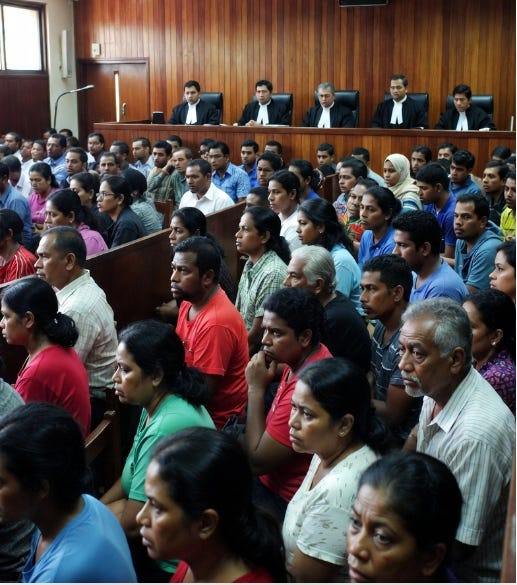
Malaysia today is in a judicial crisis where up to 80 percent of people standing before a court are unrepresented. This is particularly the case in the lower criminal court system where prisons in Malaysia are filled with convicted inmates who never had any representation in court. Justice is being denied to Malaysians in a big way.
The National Legal Aid Foundation (YBGK) and other Bar Council initiatives are grossly underfunded and totally inadequate to go any way in alleviating this problem. This means there are over one million Malaysians are unrepresented in courts each year, including the Syariah Court System.
This is a national scandal
This is a failure of the justice system brought on by poverty and other economic barriers such as low incomes, where many Malaysians live ‘hand-to-mouth’. This violates a citizen’s constitutional right to fair trial as specified in Article 5 of the Federal Constitution. This failure is perpetuating inequality where poorer litigants lose more in disputes. This affects disproportionately on the low-income (B40), rural, and other vulnerable groups including women in family disputes, and single mums.
The case of a single mother Suhaini Mohd who was sentenced to 14-month jail for stealing two packets of Milo worth RM73 must never be allowed to happen. Sentences must not be out of proportion with the crimes committed. They should also not be inconsistent with others in similar situations as well. This is ad hoc justice.
The high cost of lawyers in Malaysia today has put most people out of reach of their assistance. There are very few NGOs offering pro-bono assistance in Malaysia, leaving this massive gap of people who cant afford representation during litigation.
The judicial system is a closed shop for lawyers
The court system is not people friendly. Individuals are not assisted to put up their own defense and consequently they become a victim of the harsh and system without any empathy from the authorities running the system. No one in the courts will assist with the law, necessary procedures, and advocacy. People are completely left to their own devices where they face in most cases unrelenting judges who lack any empathy whatsoever for those in need. Judges are often angry that such defendants show down the pace of their court for the day. Too many people are becoming victims of this system.
Today’s court system procedures are overly complex and make it almost impossible for laypeople to handle the system by themselves. This leads to unfair court decisions allowing poor plea decisions, and harsher sentences, then would have been the case.
Urgent reforms are needed to make the court system people friendly. In other countries there are lawyers employed by the court and paid by the government to assist those who self-litigate. Other countries have public defender offices. Malaysia is starving the court system of funds and overlooking the reforms necessary to solve this crisis which is escaping public attention.
Self-representation in Malaysia is forced by poverty, inadequate legal aid coverage, and systemic gaps—turning it into a crisis that undermines fair trials and access to justice. This crisis is flowing onto the prison system which is receiving these unrepresented victims, who with proper counsel may have escaped a prison term. Consequently, prisons are overcrowded.
A remedy is needed to alleviate this crisis immediately. More money must be put into the legal system to provide those in need with the legal aid they need. There must be a public defender available to assist the poor with their cases. Those who represent themselves must be given assistance in law, procedure, and advocacy from duty lawyers at court houses to assist the unrepresented. There are many models around the world that can be studied. AI now can provide legal advice, and procedures can be more transparent in the court. Judicial councilors and judges must be mandated to be people friendly to assist in people gain fair justice. There must be training for judges and staff provided throughout the nation’s judicial system.
These reforms must start within the secondary education system where students are taught the basics of law and the legal system. Easy legal and court guides must be produced to assist people facing court.
There is very poor trust in the judiciary system today. Inadequate access to legal representation is contributing to this perception. This is one of the necessary reforms the government must acknowledge and tackle head on if Malaysia is going to shed itself of its ‘two-tier’ legal system.
This is a problem that is universal. It happens in the USA, the UK and in places as far away as Australia in the common law countries with great frequency that judges have been complaining in greater frequency about the burgeoning workloads from self represented litigations. All indications point to the legal culture where lawyers are no longer willing to be friends of the court and offer that obligatory pro bono service, preferring to squeeze every ounce of blood from desperate people.