

Picture: Bernama
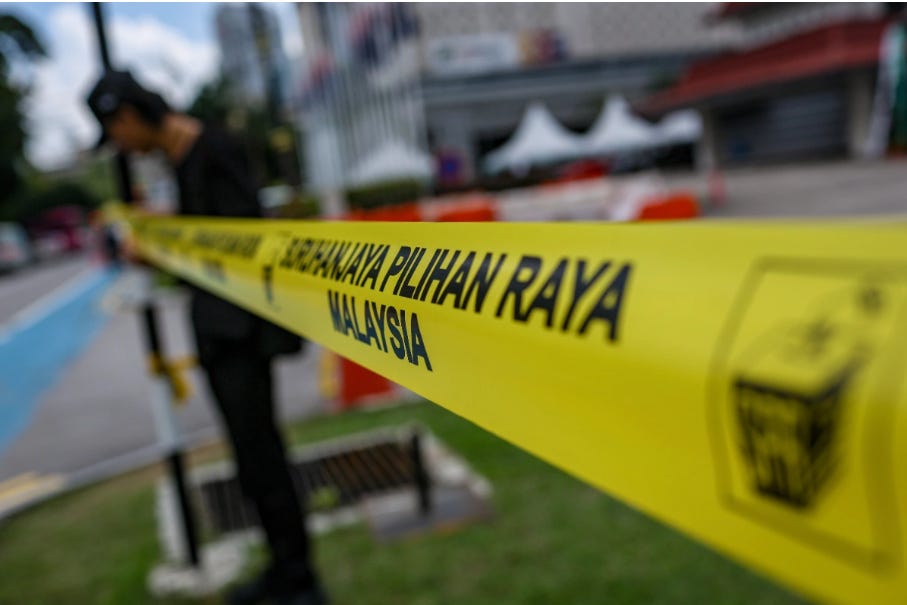
Nomination day for the 16th Johor State Election concluded on Saturday, June 27, 2026, with all 56 state assembly seats set to be contested with no walkovers recorded. Polling is scheduled for July 11, with early voting on July 7, kicking off a intense 14-day campaigning period for approximately 2.7 million eligible voters.
The contest shapes up as highly fragmented and unpredictable. Barisan Nasional (BN), led by caretaker Menteri Besar Datuk Onn Hafiz Ghazi (UMNO), is defending its supermajority of 40 seats from 2022. Pakatan Harapan (PH) is mounting a full challenge despite their federal alliance with BN. Perikatan Nasional (PN) is contesting selectively in 33 seats. Newer players like Parti Bersama (Bersama), smaller parties, and independents add further complexity.
Multi-cornered fights dominate
According to the Election Commission, 14 seats feature straight BN-PH fights, 27 are three-cornered, 12 are four-way, and three see five candidates. This fragmentation makes outcomes especially hard to forecast in marginal seats. Many key constituencies, including several that flipped in 2022, now host four- or five-way races that could split votes dramatically.
Internal divisions within opposition and reformist camps heighten uncertainty. Bersama, the new party led by Rafizi Ramli and Nik Nazmi Nik Ahmad (a breakaway from PKR/PH), is making its electoral debut by contesting 15 seats, many in southern Johor with progressive or swing voters. Targets include UMNO-held seats like Bukit Naning, Mahkota, Tiram, Permas, and Kempas, plus several DAP and one PKR-held seat. Rafizi has framed Johor as a testing ground for the party’s support and new political culture.
Bersatu also faces its own challenges amid reported tensions with PAS at the national level, though local cooperation varies. These splits could dilute anti-incumbent votes in Malay-majority areas.
Media narratives vs. ground realities
Mainstream coverage often projects a resurgent UMNO/BN and strong PH performance, painting a picture of stability under the unity government. However, with minimal public polling available, such optimism feels driven more by narrative than data. Voter sentiment in a short campaign, economic concerns, and the impact of multi-cornered contests remain wild cards. Seats with narrow 2022 margins, such as Bukit Batu (five-way fight), Puteri Wangsa, and various rural and mixed areas could swing unpredictably.
Key watchpoints include Onn Hafiz Ghazi’s defence in Machap, with a straight fight against Amanah, and non-Malay sentiment in places like Yong Peng. Smaller players like MUDA, contesting several seats could act as spoilers.
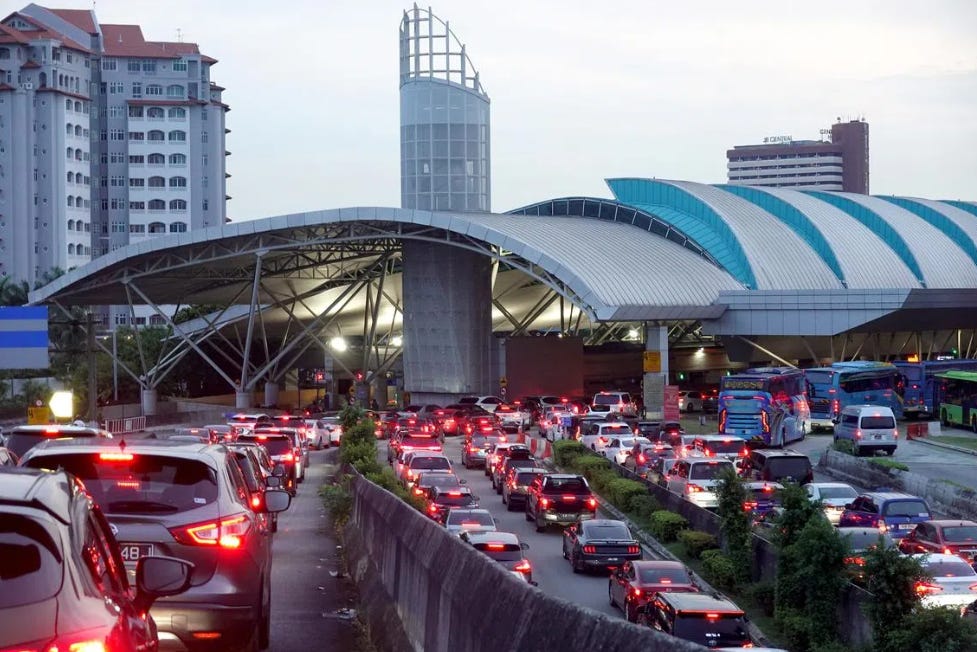
How many Johor voters who come home to vote will have a major factor on the result.
Another issue with massive influence over the final result will be how many Johor workers living in Singapore return to vote. The lack of voters returning from Singapore to vote in the 2022 state election, was a major factor favouring UMNO. Getting party supporters out to vote will be a necessary key strategy on election day.
Johor’s election serves as an early barometer for national politics under the Anwar administration. With no clear frontrunner and vote-splitting likely in dozens of seats, the result on July 11 remains anyone’s guess. A simple majority of 29 seats is required to form government, but coalitions or post-poll realignments cannot be ruled out in this fluid landscape. The coming two weeks of campaigning will be decisive.
Your donations are vital to keep some independent journalism alive.
Just click here or goto https://buymeacoffee.com/murrayhunter
Wise: https://wise.com/pay/me/murrayvictorh
PayPal: @MurrayHunter733
Subscribe Below