
Ongoing Challenges for Orang Asli Land Rights in Malaysia
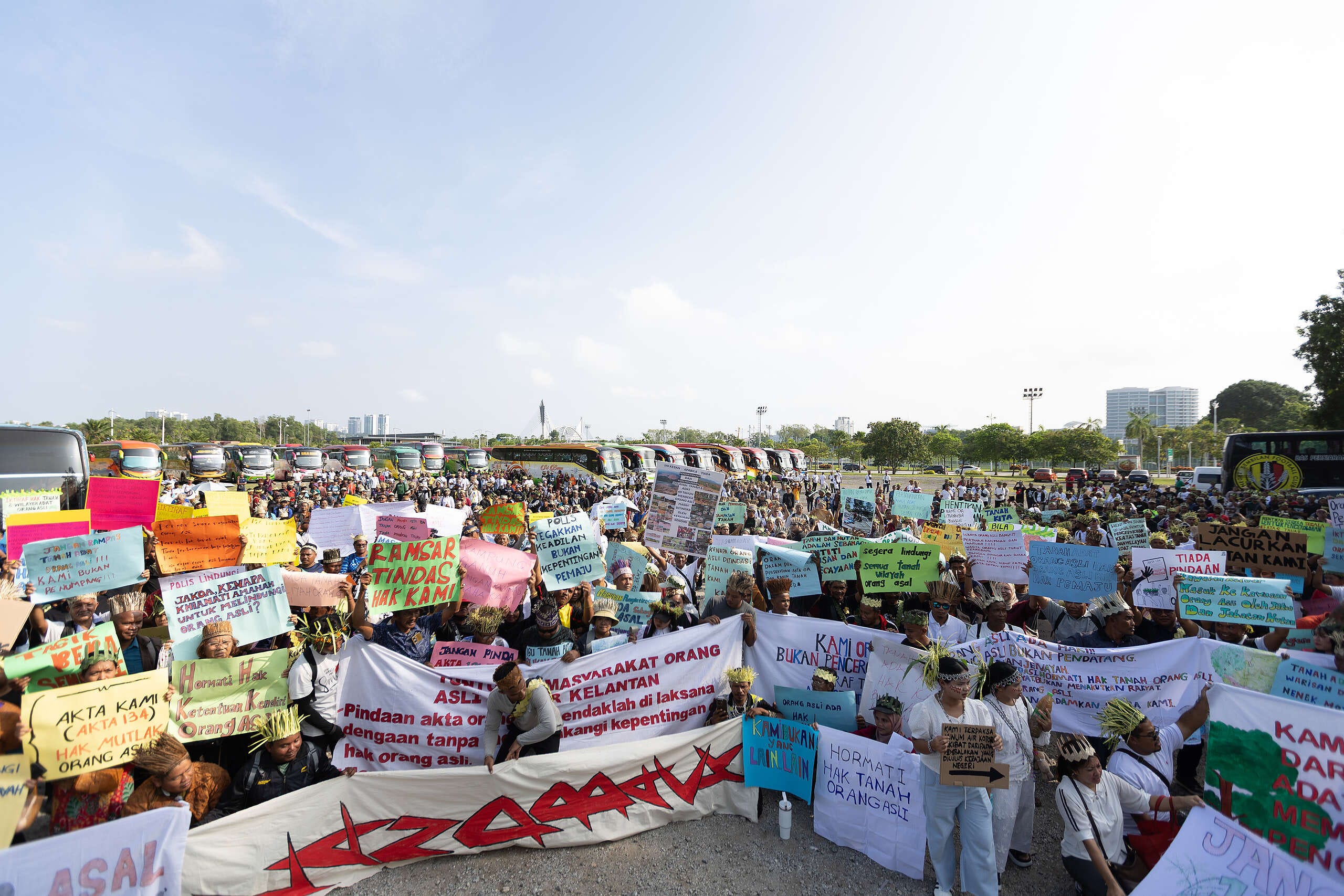
An estimated 1,500 Orang Asli descend on Putra Jaya

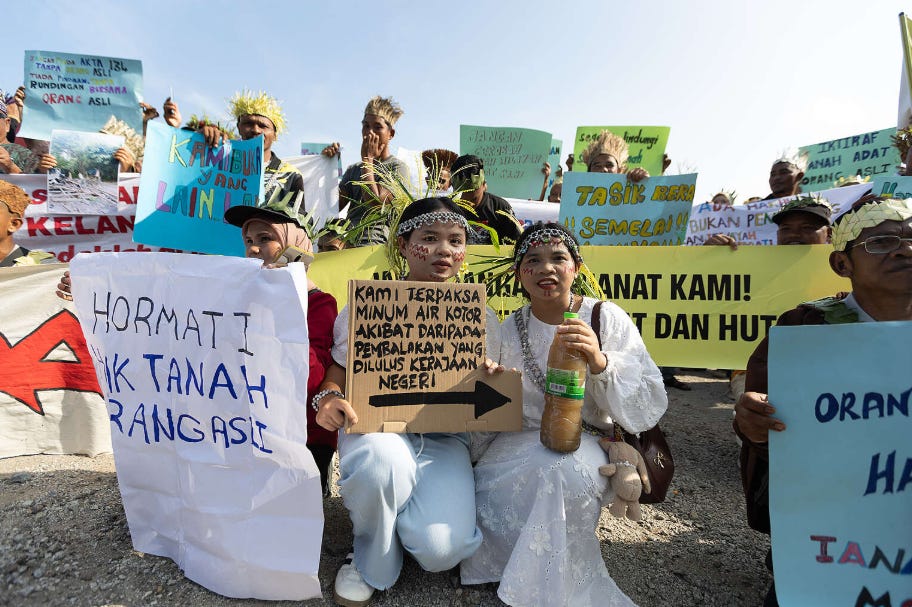
Picture: Greenpeace
Thousands of Orang Asli gathered outside the Ministry of Rural and Regional Dec=velopment to protest the authorities demolishing homes inhabited for generations by the Jakun indigenous community.
Court cases have affirmed that aboriginal title requires consultation and compensation, but enforcement varies by state, which is a problem. States control land matters.
Orang Asli, literally “original people,” comprise diverse indigenous groups in Peninsular Malaysia, including Temuan in areas like Negeri Sembilan. They number around 200,000 and have inhabited the region for millennia. Many communities maintain deep cultural, spiritual, and livelihood ties to ancestral lands through tanah adat (customary land) practices.
Greenpeace
In Negeri Sembilan, Adat Perpatih—a matrilineal customary system—influences land matters for some communities, including Orang Asli Temuan. Malaysian courts have occasionally recognized common law aboriginal title, affirming that Orang Asli customary rights predate modern land laws and cannot be easily extinguished.
However, implementation remains inconsistent. The Aboriginal Peoples Act 1954 (APA) provides some protections for declared aboriginal areas but vests significant discretion in state authorities, who often treat occupied lands as state land. This creates vulnerability to revocation for development, logging, plantations, or quarrying.
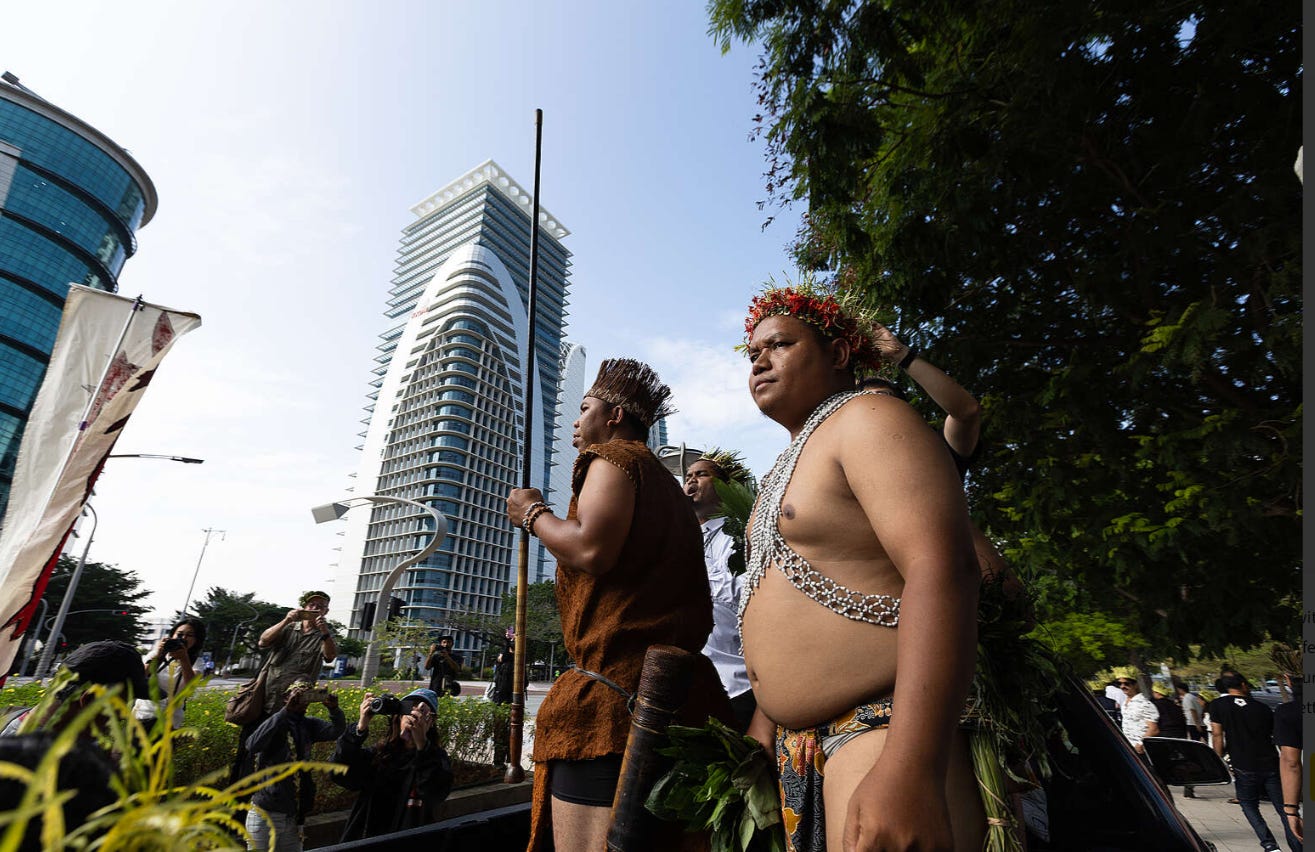
On June 12, 2026, over 1,500 Orang Asli and Orang Asal (indigenous peoples) from multiple states, including Negeri Sembilan, rallied in Putrajaya at the Ministry of Rural and Regional Development. Protesters demanded formal recognition of customary lands, an end to encroachments, and free, prior, and informed consent (FPIC) for projects on their territories.
Greenpeace
Civil society groups, including Greenpeace and PEKA, have called for a Royal Commission of Inquiry into such incidents, arguing they reflect systemic failures to uphold indigenous rights amid economic development priorities.
References to Kg Gebok in Nilai point to prior disruptions, such as quarrying activities causing flooding and environmental damage, which have long affected residents. Broader flashpoints include the May 2026 demolition of homes in Kampung Sungai Baru, Pahang (Jakun community), where structures were reportedly razed without notice, consent, or court order, displacing families and destroying community spaces.
Orang Asli are officially classified as Bumiputera (”sons of the soil”), alongside Malays and natives of Sabah and Sarawak. This status stems from their indigeneity. However, critics argue they often do not receive equivalent benefits under Article 153 of the Federal Constitution, which primarily privileges Malays and East Malaysian natives in areas like education, employment, and business.
Socioeconomic indicators for Orang Asli frequently show higher poverty rates, lower access to services, and marginalization compared to the broader Bumiputera category. Historical perceptions, land dispossession, and uneven policy implementation contribute to claims of discrimination within a Malay-centric framework. Many Orang Asli remain non-Muslim and maintain distinct cultural identities, which can complicate integration into dominant narratives of Bumiputeraism.
Advocates push for stronger legal recognition of tanah adat via common law principles, mandatory FPIC aligned with the UN Declaration on the Rights of Indigenous Peoples (which Malaysia has not ratified), and expedited gazetting of reserves. Balanced development that respects indigenous stewardship of forests could benefit conservation goals while addressing livelihoods.
One of the great problems in Malaysia today is that under-privileged groups like the Orang Asli have no voice in Malaysia today. In the coming state election this issue will not even get a mention. There is no one but a few NGOs looking after their interests.
Greater transparency, dialogue, and adherence to existing judicial rulings could help mitigate conflicts and honor the original inhabitants’ place in the nation. Sustained advocacy and media attention is crucial for accountability.