
Surviving the Great Game: Southeast Asia’s Strategic Hedging in a Multipolar World
By Samirul Ariff Othman
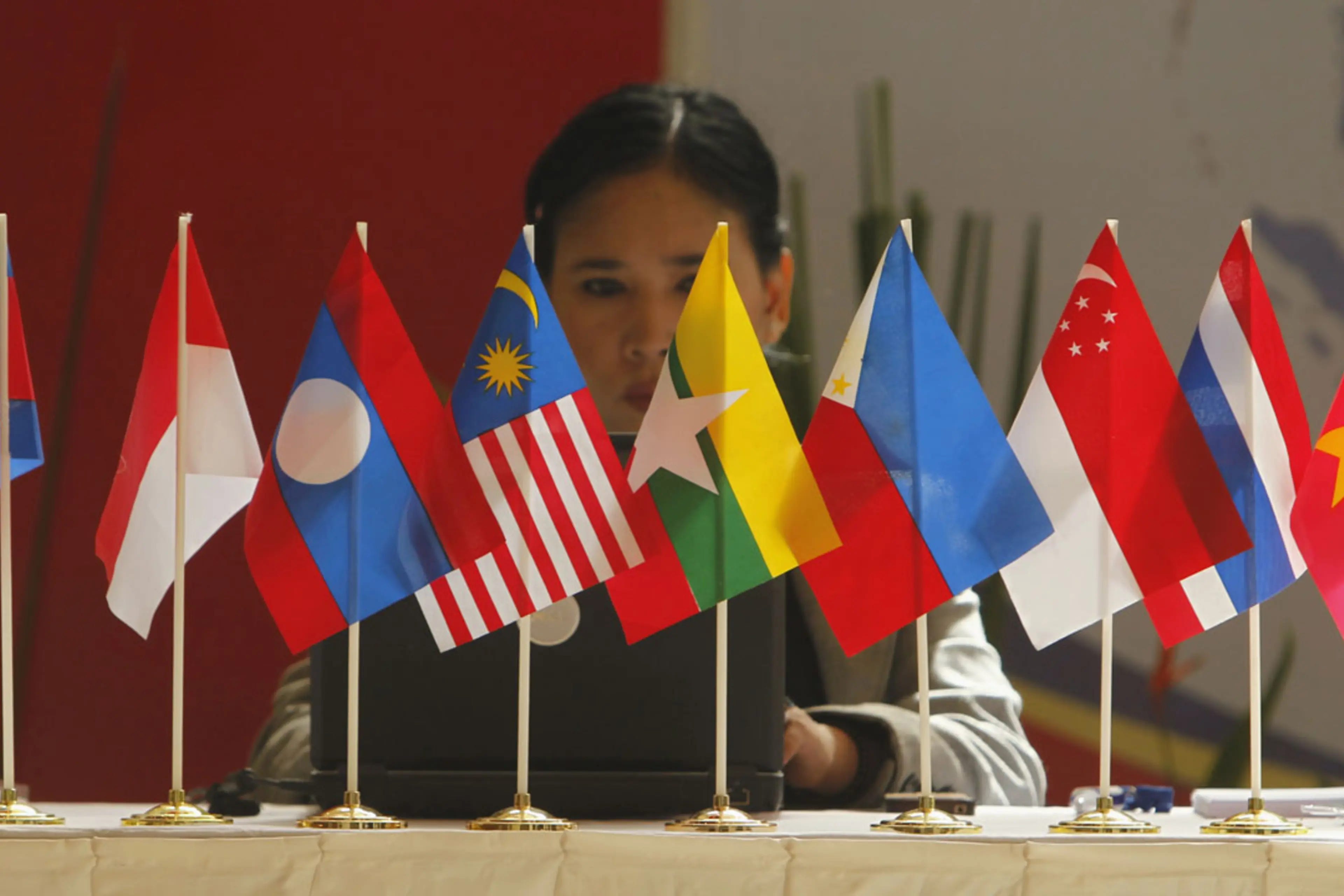
In today’s world, where great power rivalry is the defining feature of geopolitics, Southeast Asian nations are not just surviving—they’re mastering the art of strategic hedging. This isn’t about playing the U.S. and China off each other for short-term gains. It’s about creating a web of relationships that maximizes autonomy while minimizing dependency.
If you’re a small state in the Indo-Pacific, you can’t afford to be locked into a single power’s orbit. That’s why ASEAN nations are diversifying their strategic partnerships, forging deeper economic and security ties with Japan, South Korea, the European Union, and India.
Take Japan, for example. While China’s Belt and Road Initiative (BRI) floods the region with infrastructure projects, Japan offers a counterbalance—high-quality investments in rail, energy, and digital connectivity, all without the debt-trap concerns. South Korea, meanwhile, has emerged as an indispensable partner in technology, defense, and green energy, ensuring that ASEAN nations don’t have to choose between Chinese tech dominance or American supply chains.
The European Union is aggressively expanding Free Trade Agreements (FTAs) with ASEAN nations, giving them greater market access without relying too heavily on Washington or Beijing. And let’s not forget India—through its “Act East” policy, New Delhi is stepping up as both an economic and security partner, providing ASEAN with another option in the Indo-Pacific’s power play.
But this strategy isn’t just about economic diversification—it’s about survival. The reality of today’s geopolitics is an impossible trinity: no small state can maximize security, prosperity, and autonomy all at once. Lean too heavily on Washington, and you lose strategic independence. Bet everything on Beijing, and you risk economic overreliance and coercion. Try to go it alone, and you end up isolated in a world dominated by giants. The smartest small states aren’t picking sides; they’re picking strategies. Look at Indonesia, knee-deep in China’s BRI while simultaneously expanding security ties with the U.S. Vietnam is doing the same—strengthening military cooperation with Washington while keeping strong trade relations with Beijing.
Malaysia, the master of pragmatism, threads the needle between superpowers, ensuring that Chinese investments don’t come at the expense of strategic autonomy. The lesson? In a world of geopolitical tectonic shifts, the best strategy isn’t to pledge loyalty—it’s to keep your options open.
And then there’s the wildcard: the United States itself. With Trump 2.0 back in the White House, all bets are off. The Philippines, under Marcos Jr., has fully aligned itself with Washington, banking on the U.S. as a reliable patron. But what happens if Washington decides to pivot elsewhere? What if “America First” means “Asia Last”?
That’s the risk of full alignment—your fate is no longer in your own hands. The Philippines’ decision to embrace the U.S. alliance may seem logical today, but history has shown that American foreign policy can be fickle, shifting dramatically with political changes in Washington.
By contrast, ASEAN’s hedging strategy ensures that its member states are not left stranded if U.S. priorities shift toward domestic concerns, Europe, or the Middle East. Rather than putting all their eggs in one basket, these nations are investing in multiple relationships to ensure continuity regardless of geopolitical fluctuations. The name of the game is “Kancil Diplomacy,” inspired by the mouse-deer of Malay folklore, which survives not through brute force but through wit and agility. Southeast Asia isn’t flexing military muscle—it’s outmaneuvering the giants, cutting deals where it can, playing the long game, and ensuring it stays relevant without becoming a pawn.
One way it’s doing this? Plugging into Global Value Chains (GVCs) without getting trapped. The “China Plus One” strategy—where companies are diversifying their supply chains beyond China—has created a golden opportunity for Vietnam, Malaysia, and Indonesia. These countries aren’t just absorbing low-end manufacturing jobs; they’re moving up the value chain.
Vietnam is a rising semiconductor powerhouse. Malaysia is making inroads in aerospace and medical technology. Indonesia is staking its claim in EV battery production. The strategy here is simple: make yourself indispensable to multiple players, so that no single power controls your fate. In a world of economic fragmentation, the real power move isn’t just joining supply chains—it’s ensuring you can pivot if one of them starts looking more like a trap than an opportunity.
This isn’t just about the U.S. and China anymore. Small states are aligning with multiple powers to hedge against uncertainty. Japan is pouring investments into Southeast Asia as an alternative to China’s BRI. South Korea is deepening ties in defense and technology. The EU is expanding free trade agreements, offering a counterbalance to both Washington and Beijing. And India, through its “Act East” policy, is emerging as a new security and economic player in the region. The message? In a world of great power rivalry, the best insurance policy is to diversify your friends.
Now, let’s be clear: hedging isn’t perfect. It has costs, inefficiencies, and risks. But in an unpredictable world, it’s the only strategy that makes sense. ASEAN nations aren’t sitting on the fence—they’re building multiple bridges, ensuring that no matter which way the geopolitical winds blow, they won’t be left stranded. Because in a world where superpowers are playing chess, the smartest small states are playing something else entirely—poker. And in poker, the best hand isn’t always the strongest one—it’s the one that keeps the other players guessing.
——————————————————————
Economist Samirul Ariff Othman is an international relations analyst. He completed his graduate studies at Macquarie University in Sydney, Australia. The views in this OpEd piece are entirely his own.
Subscribe Below:
I'm sorry but great power rivalry does not just exist in "today's world". It has existed even in the "halcyon days" in colonialism, thus of inter-colonial rivalry. Throughout the 20th century, great power rivalry saw many "nations" (I have a conceptual problem with the term 'nation') tried to find what I prefer to call 'cover' rather than hedging their security needs. Ideas that ASEAN was born out of its own volition are naive, even silly; it was born out of fear of the potential Communist domino effect stemming from the Vietnam War. It also came at the behest of the United States and the Southeast Asian countries' need to hide under US skirts (otherwise known as security umbrella). I mean, even Singapore was "exporting" military-related goods to the Americans and the South Vietnamese principally licensed by Washington, DC. So did Japan, Taiwan and South Korea. Thailand and the Philippines happily open up their countries for US military R&R -- and the lucrative drug trade.
In the aftermath of the Vietnam War, ASEAN boasted that it was "neutral" when it came to great power rivalry, that it would take sides. That's just one big horseshit. As big a horseshit as ASEAN claiming it remains diehard on non-interference principle. It's just so naive and unrealistic to think countries do not in one way or another interfere in each other's domestic affairs. These are games "nations" play. What's missing in this write-up is an understanding of how countries, even lowly ones like ASEAN, who are barely middle powers, try to play this game. Since they do not carry much clout, except for perhaps a market of around 450 million consumers, it really has to play both sides, between the US and China. Are we being serious in thinking China is not being deliberately belligerent and aggressive in the region, from the East Sea to the Indo-Pacific? Nor for that matter the United States, which, like China today, wants to be seen not just as a great power but, like China, an imperial power -- yes, despite Trump's equivocation (though not in so many words that he prefers MAGA as an isolationist power, as it was between 1900 and 1941. Those days are long, long gone. Finitio.
Which leave these ASEAN countries to play both sides, sure, but -- ask yourself -- when push comes to shove, who do you think they'll run to to hide under its skirts? Not India, definitely. And I dare say not China, either. There is, I dare say, an inherent distrust amongst ASEAN states of both the US and China, but more so China. better the devil it knows than does not, in spite of Chinese BRI which, truth be told, isn't exactly an all-out economic plan to save the so-called Global South, but to colonize it, to turn as many of these states into tributary states to China. Not exactly a zero-sum game but in times of crises, it could well turn out that way.
Now, with China banking big in Burma (I refuse to call it Myanmar), and in Cambodia (building naval and air-bases and keeping the kleptocratic Cambodian state in its pockets), and plans to drive a canal through southern Thailand, thereby circumventing the Malacca Strait, it has been making ASEAN a wee bit more nervous. Look at the Philippines cozying up to Washington that has sought military bases. Look at Singapore, that buys weapons for its military from the US's proxy Israel. In fact, how many of ASEAN countries have actively bought weapons from China? India has recently been buying Russia arms but that's because it has the chance to buy Russian gas and oil on the cheap (don't forget: the Russian economy is struggling crazily under Putin; it needs money like Putin needs a hole in the head, literally).
Plugging into the Global Value Chains is one thing but it could all well now change under the weight of the imbecile Trump's dumbass tariffs policy. It's all so 19th century bullshit. Though Trump attended Wharton, he's basically a moron when it comes to economics. That is why he has surrounded himself around uber knuckleheads like Navarro, Lutnick, Bessant and others. With the threat of Trump and tariffs and an all-out economic war with China (especially), despite the 90-day Trump pause, the world is mired in gusts of uncertainty. And that means there will be, inevitably, a shakeup in the new international division of labor. And there is no way countries of Southeast Asia, or anybody else, will escape what is ahead, no matter how they hedge their bets. There's no hiding now.
It is once more Vietnam to the rescue. The US knows that Vietnam wants to purchase their technology and hi tech gadgets and weapons. That if allowed will constitute tens of billions in revenue to the US economy. It will also mean a new customer for the US ow reelig with cancellations and NATO hostility to its products.
So from 90% tariff the US plced on Vietnamee xports the US has reduced it to 46% and thats not bad for both the US and Vietnam with more room to manouver.
This is the starting position in worldwide trade negotiations with the US. The only ones complaining are the industrial rust belt of NATO and countries like Australia and the Democrats in the US.