


Politics in Sabah is the most complex in Malaysia. Very few people outside Sabah really understand the issues and dynamics of the Sabah political landscape. Sabah politics is completely different to Sarawak and bares little resemblance to peninsula politics, even though some Malayan parties are involved in local politics.
Sabah has a population of 3.74 million, of which 1.79 million are eligible to vote. This includes 662,000 first time voters. Traditionally about 75-80 percent will turn out to vote in one of 73 state seats. The population demographics are very different from the peninsula with 60% Bumiputera (indigenous, including Kadazan-Dusun and Bajau), 10% Chinese, 30% others (including non-citizens). Urban centers like Kota Kinabalu approximately 20% of the population. Between 60-70 percent are Muslims, around 30 percent Christian and 1.0 percent Hindu. There are a number of animistic religions as well. There is a very tolerant religious atmosphere in Sabah where one family may have members who practice different religions.
Unique to Sabah is the mass migration that has taken place from the Philippines and Indonesia, since the 1970s.
The Issues
Politics in Sabah is driven by state issues. This makes seeing any election results in the upcoming state election any form of bellwether as dangerous.
The major issue is the cost of living with rising fuel and electricity costs. The MA63 and Sabah’s revenue share are getting major media attention. Illegal immigrants and Project IC are still very sensitive issues with GRS offering a Royal Commission of Inquiry (RCI) and Warisan pledging to deport 300,000 over the next 3 years. With only 38 percent of rural roads paved, electrical outages, and poor internet infrastructure and connectivity are important, particularly in rural areas. With high profile cases such as contracts held by Hajiji’s family corruption is a major issue. Other issues include healthcare access, youth unemployment, brain drain, and general economic development verses the need for conservation are also high on voters’ minds. There is currently 18 percent youth unemployment and over 60,000 graduates work in peninsula Malaysia.
A Merdeka Centre survey in October 2025 found that 28 percent of voters have not made up their minds how to vote. A number of local issues like the SAPP/STAR exit from GRS and Ewon Benedick’s resignation from cabinet and the final electoral position his party UPKO will take will influence seats.
There has been a rise in “Sabah for Sabahan” sentiment. This is also connected with concerns over how much federal interference there might be in Sabah affairs after the election.
Sabah’s politics are highly personalized and there could be some party hopping before nomination day on October 27. Muslim Bumiputera (MB) seats (38) will be contested by Gagasan, UMNO/BN, Warisan, and Bersatu/PN. Non-Muslim Bumiputera (NMB) seats favor PBS, STAR, UPKO, and PKR. Smaller parties like KDM (Kadazan-Dusun-Murut) or independents may contest but are not detailed here due to limited seats. A first-past-the-post electoral system can sometimes bring ‘spoiler’ results.
A list of the major coalitions/parties and their potential influence are listed below.
Gabungan Rakyat Sabah (GRS) (Ruling coalition)
CM Hajiji Noor; won 38 seats in 2020. Gagasan Rakyat Sabah (Gagasan) - Parti Bersatu Sabah (PBS) - United Sabah National Organisation (USNO) - Liberal Democratic Party (LDP) - Parti Cinta Sabah (PCS) - Parti Harapan Rakyat Sabah (PHRS) (Note: SAPP recently joined; STAR may exit for independent local run).
Strong Sabah autonomy and MA63 restoration (e.g., 40% revenue share, one-third parliamentary seats). Pragmatic, development-focused governance with federal cooperation. Multiracial but ethnic-balanced (Kadazan-Dusun for NMB seats; Malay-Bumiputera for MB seats). Anti-corruption and “Sabah for Sabahans” identity politics.
Informal pact with PH (federal unity government partner) for seat-sharing to avoid vote-splitting. Potential “Sabah Bloc” with other local parties (e.g., PBS, STAR) to emulate Sarawak’s GPS model. Open to BN collaboration but prefers independence from Peninsular dominance.

Current CM Hajiji Noor
Warisan Plus
Main opposition; 32 seats in 2020; led by Shafie Apdal.
Parti Warisan Sabah (Warisan) (Potential allies: Local PH/BN defectors).
Sabah-first nationalism emphasizing self-determination and cultural preservation. Anti-federal overreach; push for MA63 full implementation. Multiracial progressivism with strong Muslim Bumiputera (MB) appeal; focuses on anti-corruption and equitable development.
Loose ties with BN (opposition pact at state level; federal differences). Possible post-election confidence from PH or independents. Historically allied with PH in 2020 but now independent to highlight local identity.
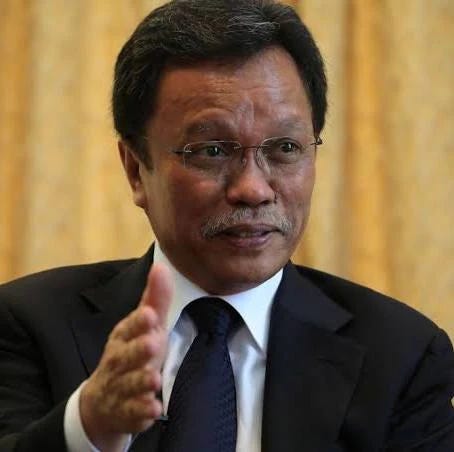
Former CM and CM hopeful Shafie Apdal
Barisan Nasional (BN)
United Malays National Organisation (UMNO). Potential local allies like MCA/MIC (minimal Sabah presence).
Conservative Malay-Bumiputera rights and Islamic values. Pro-federal stability with economic development via BN’s national network. Ethnic harmony through affirmative action; critiques GRS as unstable.
Potential opposition pact with Warisan against GRS. Federal ties to UMNO but rules out GRS collaboration; may seek PH support in hung parliament. Eyes MB seats for Malay dominance.

High hopes for BN
Pakatan Harapan (PH)
Limited standalone run due to GRS pact.
Democratic Action Party (DAP), People’s Justice Party (PKR), Amanah, United Progressive Kinabalu Organisation (UPKO; may contest independently).
Reformist, multiracial democracy with social justice and anti-corruption. Pro-federal integration but supports MA63 negotiations. Appeals to urban NMB voters (Chinese, Kadazan-Dusun) via inclusive policies.
Seat-sharing pact with GRS (unity government at state level). UPKO hints at independent run; potential bridge to Warisan in NMB areas. Federal alignment with Anwar Ibrahim’s government.

PM Anwar Ibrahim on the hustings for PH
Perikatan Nasional (PN)
Aggressive expansion. first major Sabah contest. Intends to field candidates in all 73 seats.
Parti Pribumi Bersatu Malaysia (Bersatu), Pan-Malaysian Islamic Party (PAS). (Note: SAPP exited PN in Dec 2024).
Bumiputera (especially Malay) empowerment and conservative Islam. Anti-establishment reform; opposes “liberal” federal policies. Economic populism targeting rural MB voters with anti-corruption rhetoric.
Standalone push but open to post-election deals with BN or Warisan. Limited local ties post-SAPP exit; focuses on national Islamist appeal in MB seats.
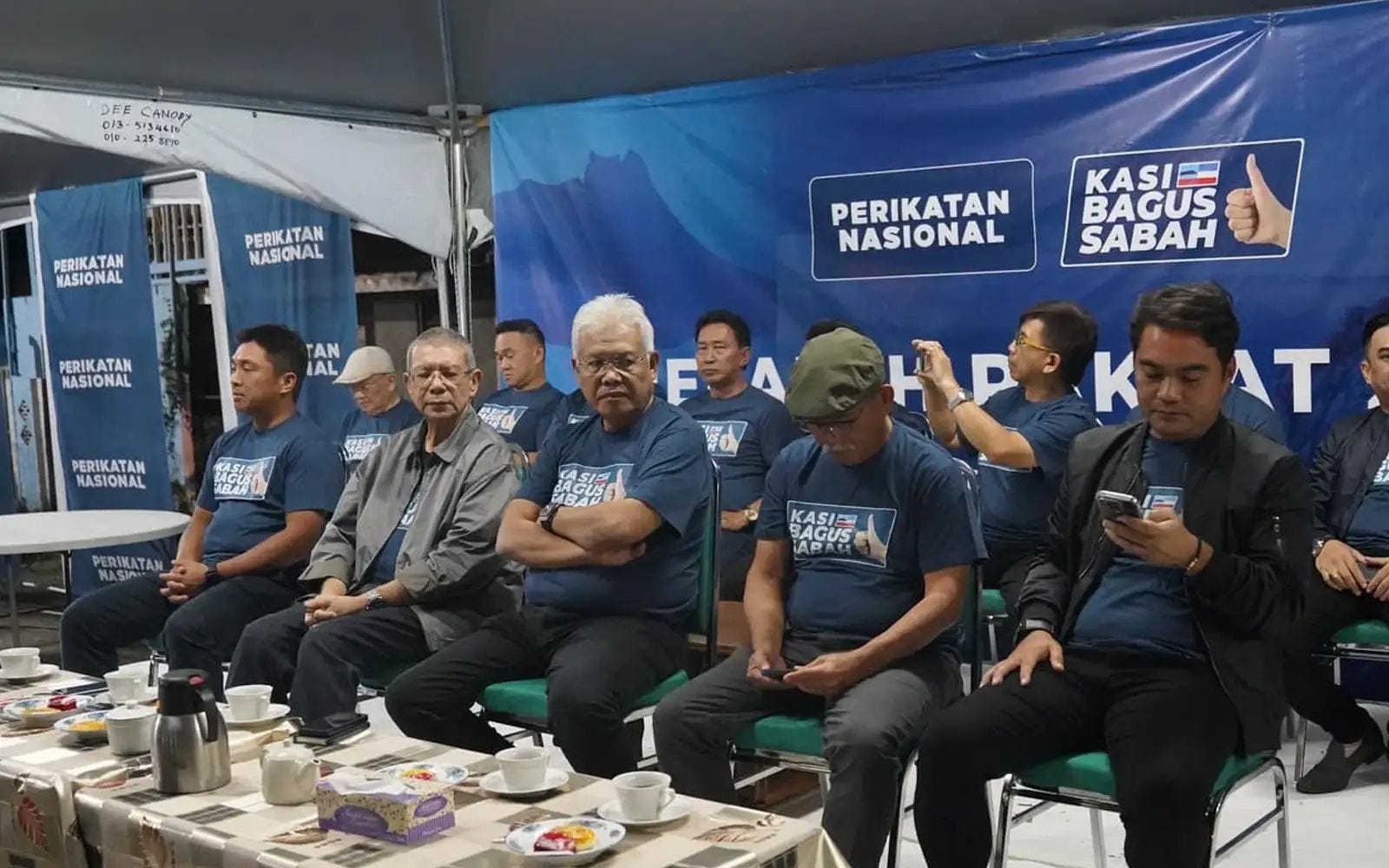
Sabah PN with 18 seat target